For years, containers have been the polite guests of operating systems. They arrived, did their job, and left without rearranging the furniture. The OS was the house. Containers were the tenants.
bootc flips that relationship on its head.
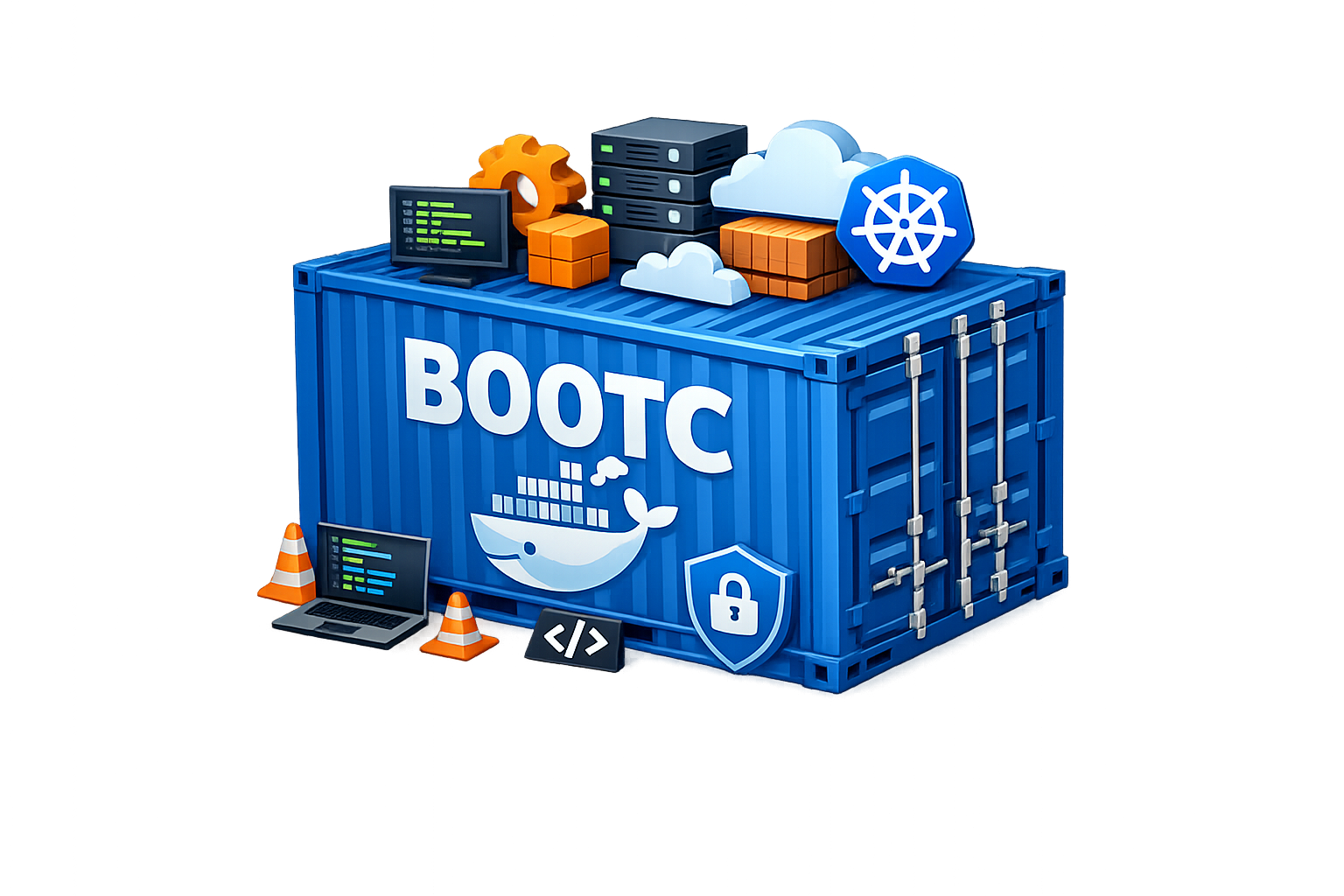
bootc is a tool and a model for building, running, and updating entire operating systems as container images. Not containers inside an OS, but the OS itself — kernel, userspace, configuration — delivered and managed using container image workflows.
If that sentence made your eyebrows rise slightly, good. That’s the correct physiological response.
The Big Idea
Traditionally, operating systems are installed once and then slowly accrete changes: packages added, configs tweaked, scripts copied from old wikis, and mysteries preserved for future archaeologists. bootc treats the operating system as an immutable artifact. You build it once, test it, push it to a registry, and deploy it exactly like you would any other container image.
Instead of dnf install on a running system, you:
- Build a new image
- Boot or upgrade to it
- Roll back if needed
The OS becomes declarative, reproducible, and versioned. 👍🏻
How bootc Fits Into the Ecosystem
bootc doesn’t exist in isolation. It sits at the intersection of several ideas that have been circling each other for years:
- Image-based operating systems like Fedora CoreOS and Silverblue
- OSTree-style atomic updates
- Container registries as universal distribution mechanisms
- GitOps thinking applied below the application layer
bootc provides tooling to install, boot, update, and manage a system that originates as a container image. The image lives in a registry. The system on disk is a materialised version of that image.
This means your OS updates can be:
- Atomic (all-or-nothing)
- Rollback-capable
- Cryptographically verified
- Delivered via the same pipelines you already use for containers
Your CI/CD system suddenly knows how to ship an operating system.
That’s new.
What bootc Is Not
bootc is not about running more containers faster. It’s not Kubernetes magic dust. It’s not a replacement for package managers inside traditional mutable servers.
It’s for cases where you want strong guarantees:
- Edge devices that must update reliably
- Servers that should never drift
- Appliances where “just SSH in and fix it” is a last resort
- Systems where reproducibility matters more than improvisation
bootc says: stop treating the OS as a snowflake. Treat it like code.
Why This Matters
We already learned this lesson at the application layer. We stopped hand-installing dependencies on production servers and started shipping images instead.
bootc asks the obvious follow-up question we somehow avoided for a decade:
If containers work so well for apps, why are we still installing operating systems like it’s 2003?
Once you accept the premise, a lot of operational pain suddenly looks optional.
Upgrades become deployments. Rollbacks become routine. Debugging starts with “which image are you running?” instead of “what changed on that box last Tuesday?”
The Philosophical Shift
bootc isn’t just a tool. It’s a worldview.
It treats the operating system as a product, not a place. You don’t log into it to make changes. You replace it with a better version.
That can feel uncomfortable at first. Humans like tinkering. Systems like certainty.
bootc sides with the systems.
And in a world of fleets, edge nodes, and automated infrastructure, that might be exactly the bias we need. 😄